
Best GLP-1 Companion Apps 2026
Managing GLP-1 medications like semaglutide and tirzepatide can be challenging, especially with weekly cycles of appetite suppression and rebound hunger. The right app can help you stay on track by offering tools for injection schedules, side effect tracking, and protein-focused meal planning - key to preserving muscle during weight loss. Here’s a breakdown of the top GLP-1 companion apps in 2026:
- Welling: Focuses on protein tracking with AI-powered meal logging in just 2.6 seconds. ($9.99/month or $79/year)
- Glapp: Free app that maps medication cycles and provides hunger-phase insights.
- Shotsy: Tracks medication levels, injection sites, and side effects with exportable reports. ($9.99/month or $59.99/year)
- MeAgain: Combines GLP-1 tracking with food logging and symptom management. ($10/month or $30/month for clinical care)
- MyNetDiary: Offers GLP-1-specific nutritional tracking, including protein and hydration goals. ($9.99/month or $59.99/year)
Quick Comparison
| App | Best For | Key Weakness | Price |
|---|---|---|---|
| Welling | Protein-focused meal tracking | Requires subscription for full tools | $9.99/month or $79/year |
| Glapp | Free, medication cycle insights | Limited nutrition tools | Free |
| Shotsy | Precision medication tracking | No nutrition database | $9.99/month or $59.99/year |
| MeAgain | All-in-one GLP-1 management | No PDF export, Android lags reported | $10/month or $30/month clinical care |
| MyNetDiary | Nutritional depth | GLP-1 tools locked behind paywall | $9.99/month or $59.99/year |
Each app serves a different purpose, so choose based on your priorities - whether it’s precise medication tracking, protein intake, or hunger-phase management.
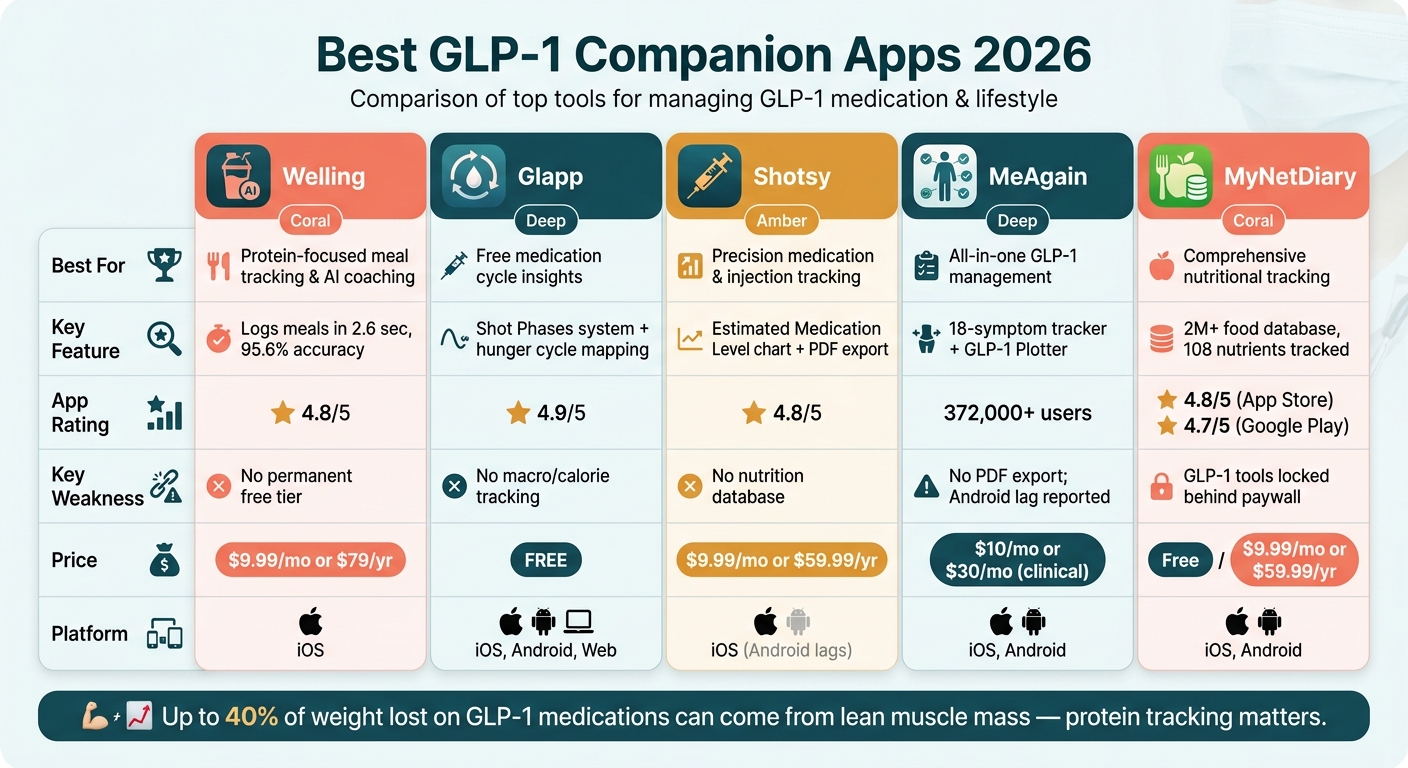
Best GLP-1 Companion Apps 2026: Side-by-Side Comparison
What's the BEST App for Tracking Food and Shots on GLP-1?
sbb-itb-8de85f1
1. Welling
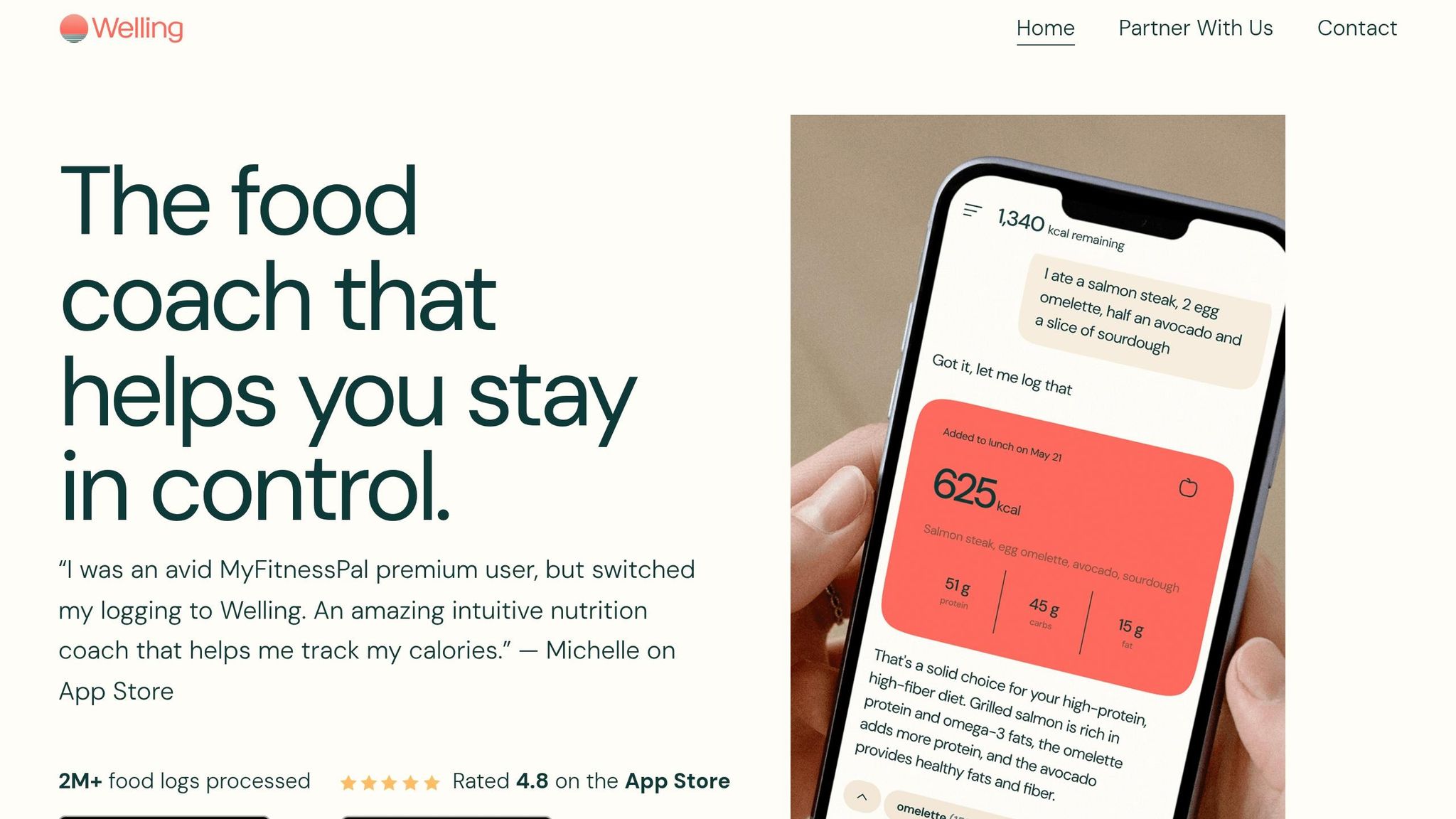
Welling is a specialized GLP-1 companion app designed for individuals on GLP-1 therapy. It focuses on small, protein-based meals, which are essential for preserving muscle mass during treatment.
With data from 15,000 meals, Welling boasts impressive accuracy: a 95.6% top-1 identification rate and a portion estimation error of just ±1.2%. In comparison, MyFitnessPal’s error margin is ±17% - a significant difference that highlights Welling's precision, especially for GLP-1 users who rely on accurate macro tracking for their smaller meals.
Logging meals with Welling is quick and easy. Users can simply snap a photo, type a short note, or record a voice message, completing the process in an average of 2.6 seconds. This streamlined approach is particularly helpful on days when GLP-1-related nausea makes detailed tracking difficult. The app’s AI even adjusts calorie and protein goals based on the user’s current GLP-1 dosage, ranging from 0.5 mg to 2.4 mg.
Beyond meal tracking, Welling monitors diet, activity, and weight trends in real time. Its AI coach provides instant feedback after each log, letting users know exactly how much more protein they need and offering specific food suggestions to meet those goals.
"If I need to know how much more protein I need, it tells me instantly and even suggests good ways to get there." - DezzMondoo, Verified User
Welling is available for $9.99 per month or $79 annually, with a 7-day free trial. However, it does not offer a permanent free tier. The app is highly rated, earning a 4.8/5 score on the Apple App Store.
Next, we’ll take a closer look at Glapp and its unique offerings.
2. Glapp
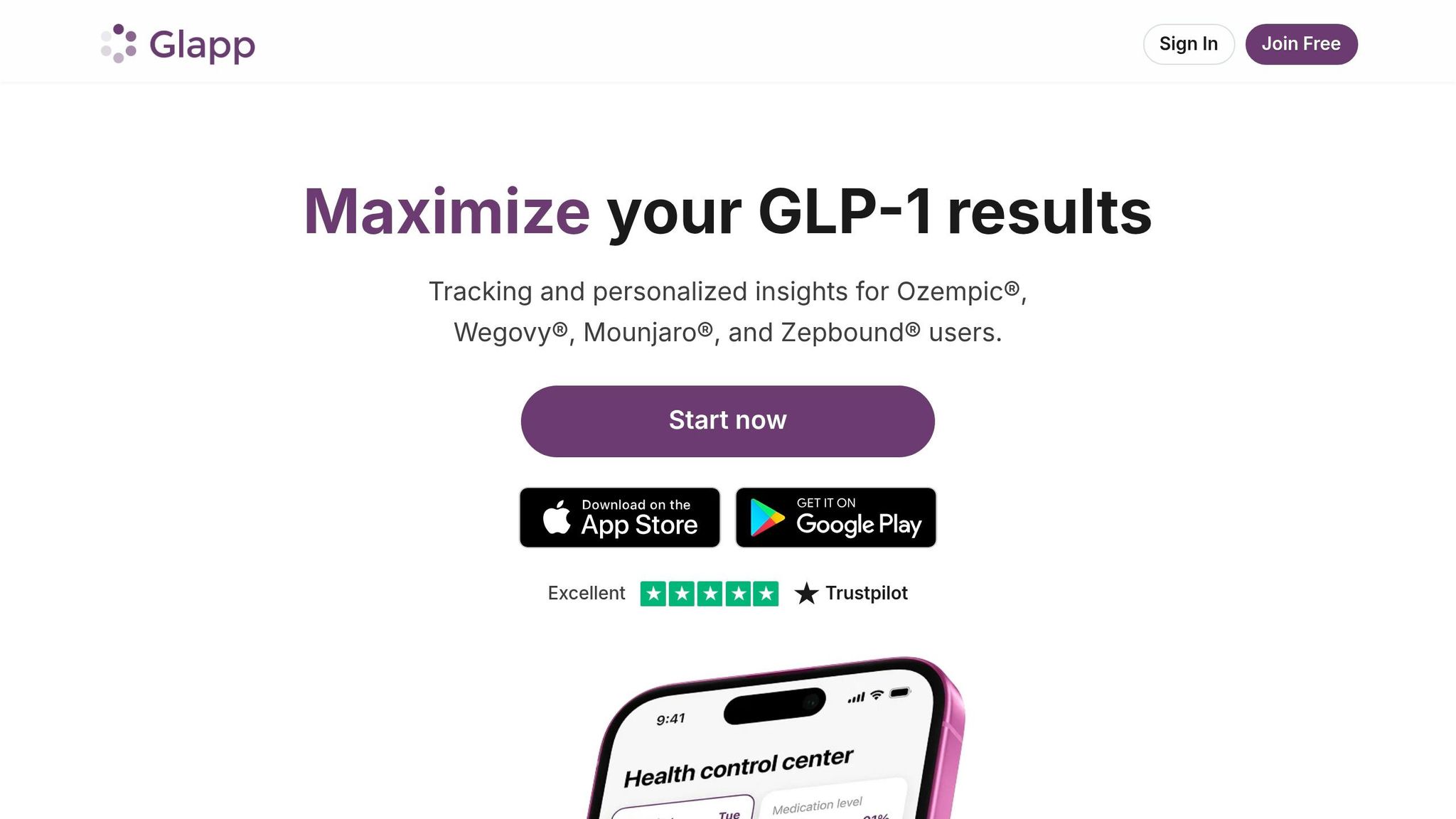
Glapp takes a different approach compared to Welling. Instead of focusing on calorie counts or detailed nutritional analytics, it helps you understand how your GLP-1 medication affects your body throughout the week. This includes insights into hunger patterns, cravings, and potential side effects.
One standout feature is its "Shot Phases" system, which visualizes how your medication's concentration changes over a weekly cycle. It covers both semaglutide and tirzepatide, mapping out the rise, peak, and fade. This visualization feeds directly into personalized nutrition advice tailored to these phases. On top of that, progress tracking tools allow users to compare their outcomes with clinical data, offering a sense of how they're doing.
"I LOVE the nutrition advice based on shot phases. I finally understand why certain meals make me uncomfortable at specific times." - David H., Glapp User
Another helpful feature is the "On-track check", which compares your weight loss progress to clinical trial benchmarks for your specific medication and dosage. For those feeling like their results are slower than expected, this feature provides context and reassurance.
Glapp also handles the practical side of GLP-1 therapy. It tracks your medication supply, including details like remaining doses, vial counts, and expiration dates. Plus, its "Glapp Wisdom" tool answers treatment-related questions with research-backed insights. Rated "Excellent" on Trustpilot, the app is completely free and available on iOS, Android, and web.
However, there are trade-offs. Glapp doesn't include features like injection site rotation tracking, and its nutrition tools are intentionally simple - no calorie counting or macro tracking. If you need more detailed nutritional guidance, Welling might be a better fit. But for those looking for a streamlined experience with unique insights, Glapp delivers.
3. Shotsy
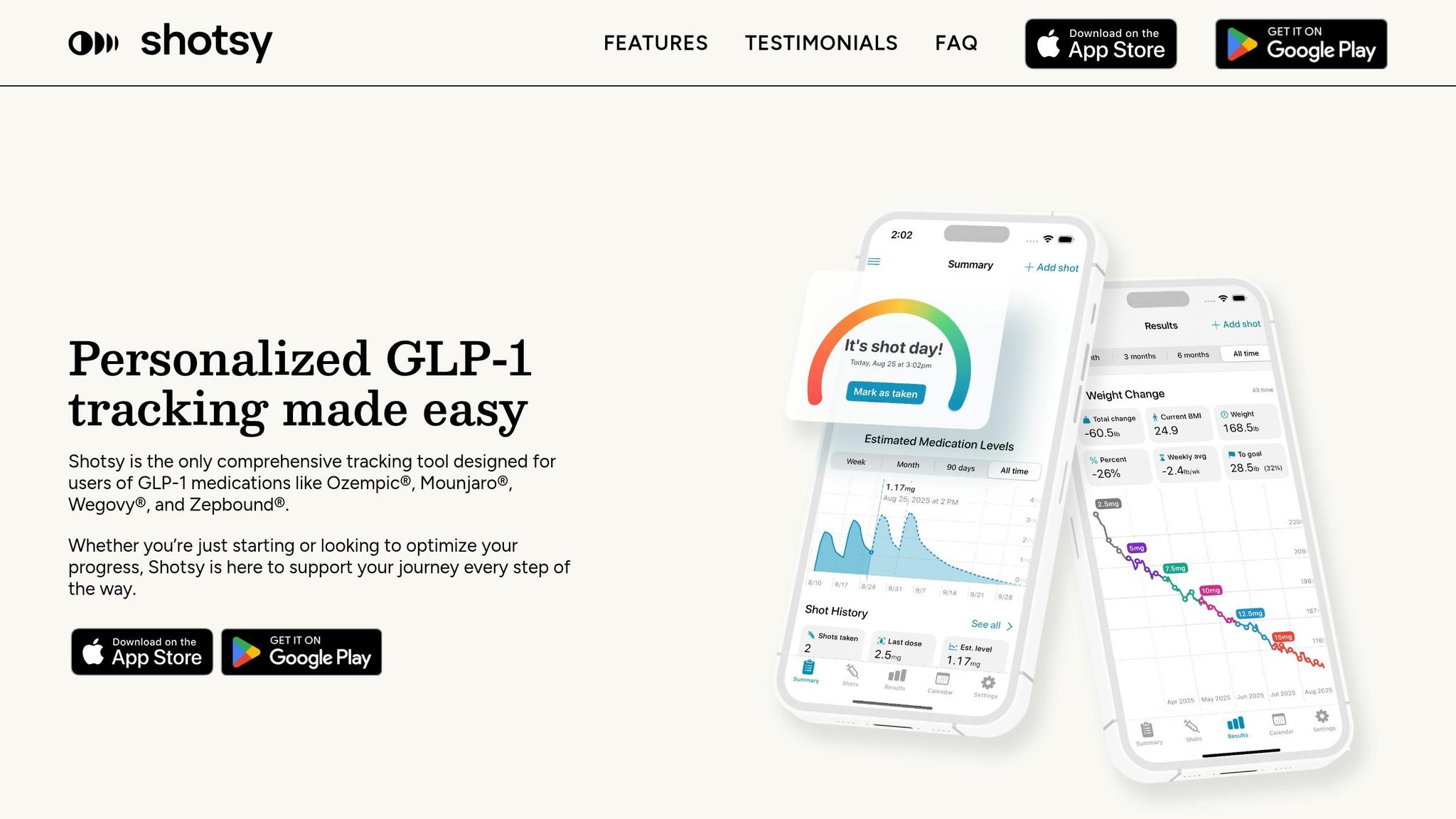
Shotsy stands out as a medication tracker that's all about precision. With over 1 million downloads and an impressive 4.8/5 rating, it's a leader in its category, thanks to its focus on getting the essentials right.
One of its standout features is the Estimated Medication Level chart, which uses peer-reviewed pharmacokinetic data to visualize how your drug concentration fluctuates throughout the week. This feature is particularly helpful for managing GLP-1 side effects like nausea, which often align with peak drug levels. By understanding these patterns, users can better plan their meals and daily activities.
The app also offers tools to track injection site rotation and log symptoms such as nausea and fatigue. As of May 2026, Shotsy includes Injection Site Stats, which provide insights into which areas of the body might experience more discomfort. Users can even export their complete dose and side-effect history as a PDF, making it easy to share detailed records with their healthcare provider during follow-up visits. However, one limitation is the absence of a built-in food database or coaching tools, so users will need to pair the app with another tool like MyNetDiary for nutrition tracking.
The free version covers dose tracking, side-effect logging, and basic weight charts. Upgrading to Shotsy+ unlocks additional features like Apple Health integration, advanced charts, and PDF export for $9.99/month or $59.99/year. That said, the Android version lags behind iOS in terms of updates and overall polish. Another drawback is that Shotsy tracks total weight loss only, without distinguishing between fat and lean mass - a notable omission given that up to 39% of weight lost on GLP-1 medications may come from lean mass.
"Shotsy tells you what you lost. It cannot tell you what kind of weight you lost." - Dr. Sarah Mitchell, PhD, Exercise Physiologist
For those who value detailed medication monitoring, Shotsy offers a solid set of tools. Next, we’ll take a closer look at how MeAgain introduces additional features for GLP-1 users.
4. MeAgain
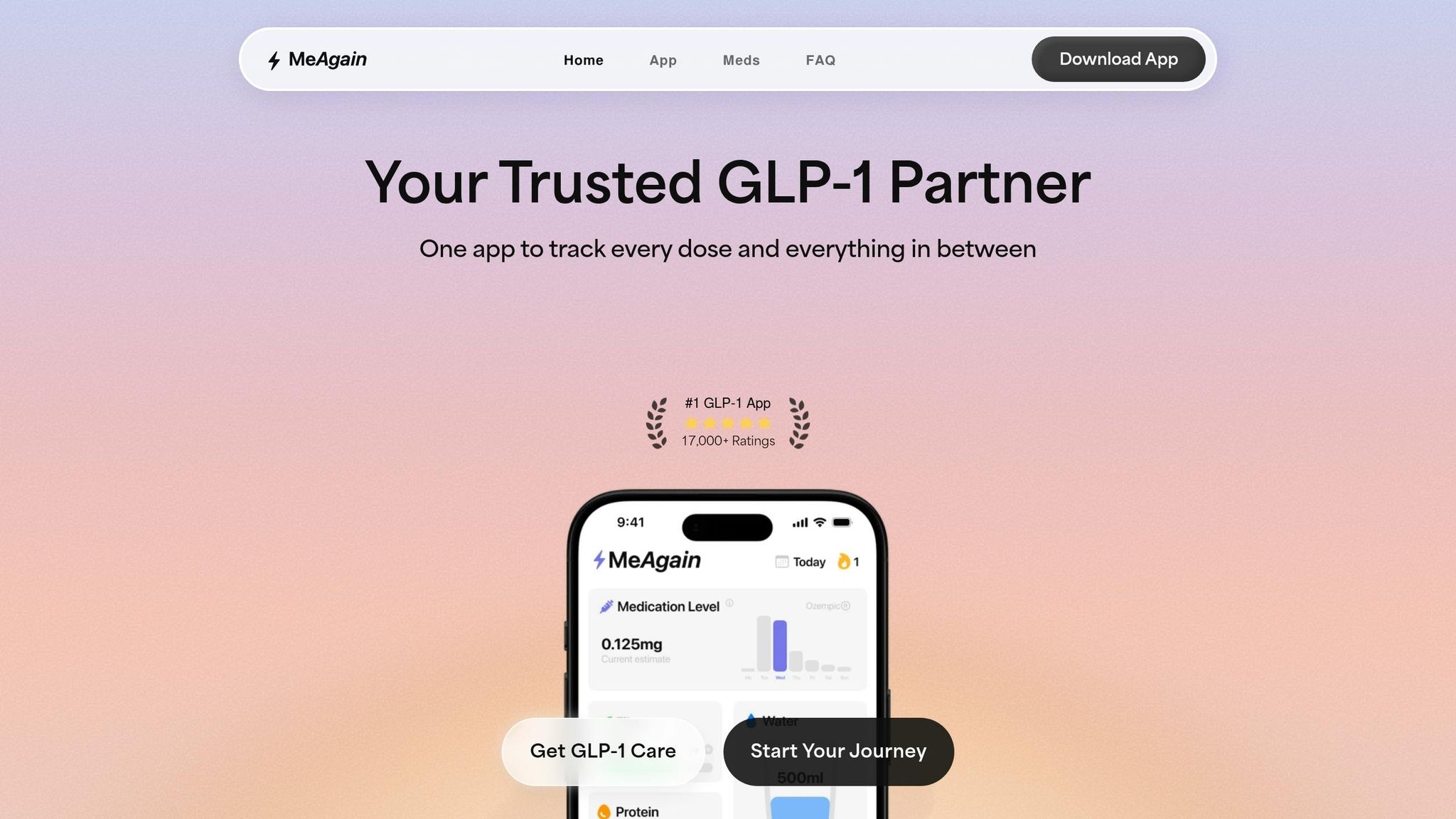
MeAgain is built specifically for GLP-1 users, offering a comprehensive platform that brings together medication tracking, food logging, and progress monitoring. By May 2026, the app had attracted over 372,000 users. Unlike other apps like Welling or Glapp, which focus on specific features, MeAgain delivers an all-in-one solution for users managing their GLP-1 therapies.
The app supports tracking for both injectable (Wegovy, Zepbound, Ozempic, Mounjaro) and oral (Rybelsus) GLP-1 treatments. One standout feature is the GLP-1 Plotter, a dynamic tool that estimates medication levels over time, helping users see how their doses align with appetite changes and side effects. For side-effect management, users can log 18 common symptoms using a severity slider (rated 0–10), add custom symptoms, and view everything on a unified timeline alongside their food intake and medication history.
When it comes to meals, MeAgain simplifies tracking with multiple input options, including AI photo scans, barcodes, voice commands, and quick-add features. Unlike traditional calorie-focused apps, MeAgain shifts the emphasis to protein, fiber, and water intake - key factors for maintaining muscle and managing gastrointestinal symptoms.
"The calorie counter is practically nonexistent, which I love. It doesn't focus on calories or fat shaming - the protein and the fiber are definitely running the show." - Momma25q, Verified App Store Review
For progress monitoring, MeAgain includes tools like Ghost Photo overlays, which let users compare current photos with older ones to catch subtle changes, and Journey Cards, where users can document non-scale victories like better-fitting clothes. One user shared their success story, reporting a 47-lb weight loss over four months, crediting the app's precise medication tracking.
However, MeAgain does have some drawbacks. It doesn’t offer a PDF export feature for sharing data with clinicians, and Android users have reported occasional lag during food logging. The app offers two pricing tiers: MeAgain Premium at $10 per month and a clinical care tier at $30 per month, which includes consultations with clinicians and prescription management.
5. MyNetDiary
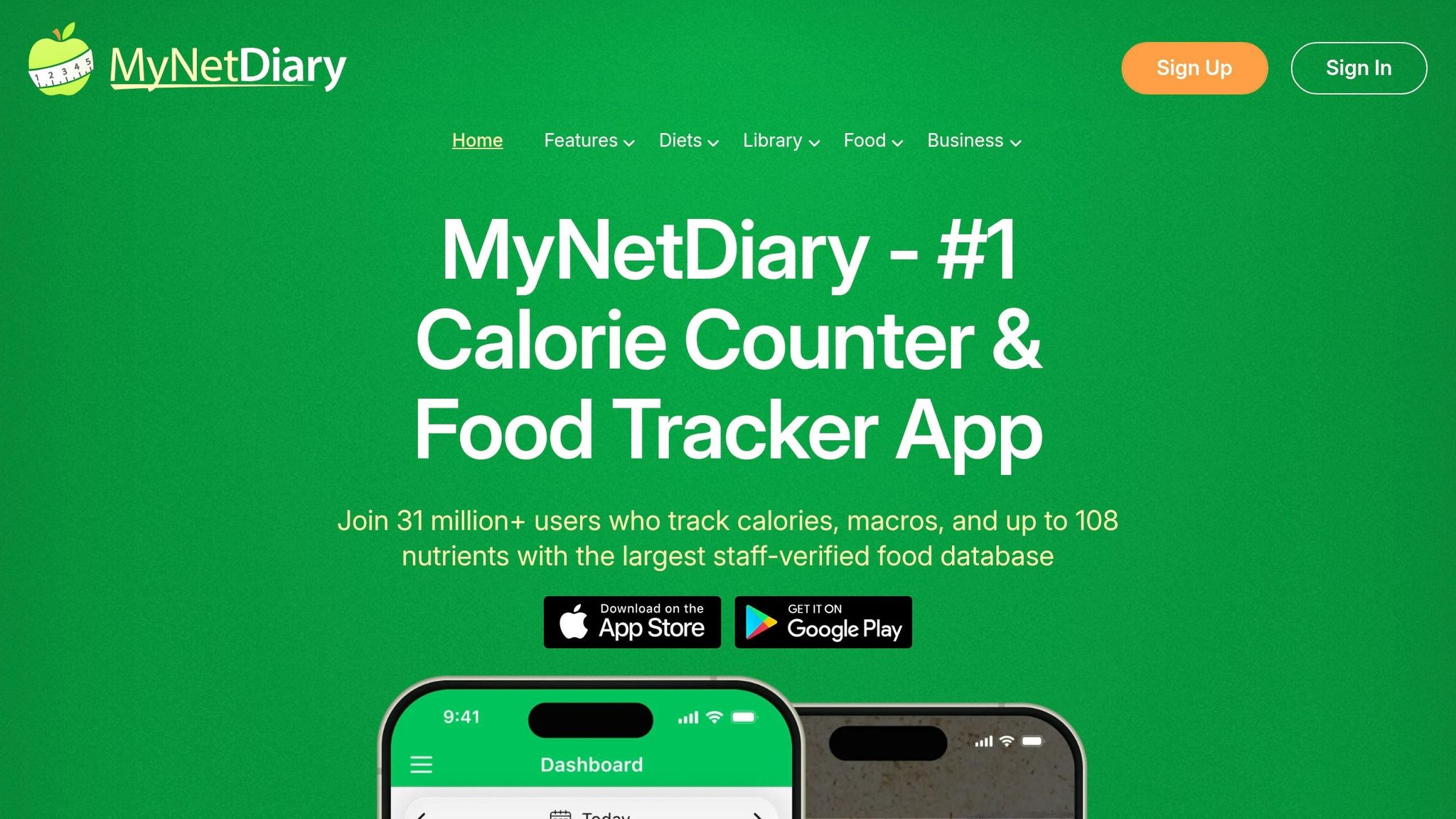
MyNetDiary combines in-depth nutrition tracking with focused GLP-1 support, offering a well-rounded platform for users managing their weight and medication. Unlike apps such as Shotsy or MeAgain, which primarily focus on medication tracking, MyNetDiary adds GLP-1 support to its already robust nutritional tools, making it a standout option for comprehensive food and health tracking.
The app's GLP-1 Companion mode reorganizes its dashboard to highlight key areas like protein, fiber, and hydration, alongside medication doses, injection reminders, and digestion tracking. Why is this important? Research shows that up to 40% of weight lost on GLP-1 medications can come from lean muscle mass unless protein intake is carefully monitored. MyNetDiary helps users manage this by allowing custom protein targets (typically 80–120 g/day), bridging the gap between nutritional needs and medication management. Sergey Oreshko, CEO of MyNetDiary, explained the app’s unique approach:
"The GLP-1 users we talked to were running two apps, a medication tracker and a calorie counter, and neither one knew about the other. We brought them together."
MyNetDiary boasts a verified food database with over 2 million items, tracking 108 nutrients. Logging meals is also faster - tests show it requires 31% fewer steps than MyFitnessPal to log a week’s worth of meals. The app uses AI tools like photo meal scanning, voice logging, and an AI Restaurant Menu Scan, which suggests high-protein choices when dining out. Premium users also gain access to two dietitian-designed 7-day meal plans tailored for GLP-1 users, with daily protein targets of 80–90 g.
These features make MyNetDiary a leader in combining nutritional tracking with GLP-1 therapy. The app has earned a 4.8/5 rating on the App Store and 4.7/5 on Google Play. Forbes Health even named it the #1 Best Weight Loss App of 2025, with active users reporting an average weight loss of 1.4 lbs per week. Premium subscriptions, which include features like the medication tracker, injection reminders, and curated meal plans, cost $9.99/month or $59.99/year. For access to advanced tools like the AI Coach and voice logging, users can opt for the Premium Plus tier.
While Shotsy may excel in detailed injection tracking, MyNetDiary offers unmatched nutritional depth, making it a top choice for those seeking an all-in-one solution for food and GLP-1 management.
Next, we’ll take a closer look at the overall pros and cons of these GLP-1 companion apps.
Pros and Cons
When choosing an app, it’s important to weigh its strengths and limitations. Here’s a closer look at how Welling and MyNetDiary stack up.
Welling shines with its quick and efficient meal logging. Its AI-powered photo entry logs meals in just about 4 seconds. The app's protein-focused home screen is tailored to help mitigate muscle loss risks tied to GLP-1 therapy. With features like adaptive dosage targets and a supportive coaching tone, it was rated the #1 app among GLP-1 users in 2026. However, many of its advanced features require a Premium subscription.
MyNetDiary, on the other hand, is a standout for nutritional tracking. It monitors 108 nutrients using a verified database of over 2 million foods and reduces meal logging steps by 31% compared to MyFitnessPal. Its GLP-1 Companion mode is specifically designed to enhance GLP-1 therapy management. That said, crucial tools like the medication tracker, injection reminders, and curated meal plans are only available with a Premium plan.
Here’s a quick comparison of the two apps:
| App | Best For | Key Weakness | Starting Price |
|---|---|---|---|
| Welling | All-in-one GLP-1 tracking with AI coaching | Advanced features require a Premium plan | Freemium |
| MyNetDiary | Comprehensive nutritional tracking with GLP-1 mode | GLP-1 features are behind a paywall | Free / $9.99/month |
These insights reflect findings from earlier detailed reviews, emphasizing the distinct benefits each app offers for managing GLP-1 therapy.
For users who want both precise medication tracking and detailed nutritional insights, Welling and MyNetDiary are strong contenders.
Conclusion
Selecting the right GLP-1 companion app boils down to what matters most to you. Each app highlighted above serves a different purpose in managing GLP-1 treatments.
For those focused on precise nutritional tracking, Welling stands out. Its AI-powered logging system is particularly useful for GLP-1 users who often consume smaller, fragmented meals, ensuring accuracy in tracking. If your priority is clinical tracking, Glapp is a solid choice. With a stellar 4.9/5 rating from 446 App Store users (as of May 2026), it provides reliable medication and health data tracking - and it’s free to use.
For users concerned about preserving muscle during weight loss, remember that studies indicate up to 40% of weight loss can come from lean tissue. Apps like Welling, which emphasize protein intake, can help support your long-term health goals.
Here’s a quick breakdown to help you decide:
| Your Priority | Recommended App |
|---|---|
| Nutritional accuracy & AI coaching | Welling |
| Clinical data & medication tracking | Glapp |
| Ease of use & side-effect support | Shotsy or MeAgain |
| Comprehensive nutrient tracking | MyNetDiary |
While no app is flawless, Welling offers the most well-rounded solution for GLP-1 management, earning its top rating in 2026. Start with the free version to explore its features, and consider upgrading to unlock even more tools.
FAQs
Can I use one app for both GLP-1 shots and meal tracking?
Many apps are built to handle both GLP-1 injection tracking and meal logging in one convenient platform. Options like HereForIt, GlyPio, Lina, Mingo, Pep, Trimm, Glone, Glapp, and Welling offer features such as medication dose tracking, injection site logging, and tools like barcode scanning or macro tracking. These apps serve as all-in-one health tools, making it easier to sync your medication routine with your diet and monitor your progress.
What’s the best way to track hunger and side effects across my weekly dose cycle?
Using a GLP-1 companion app can make managing your treatment more straightforward by tracking symptoms and injection schedules. Apps such as Shotsy, Titra, Mingo, Glone, and Trimm allow you to log your doses and keep tabs on side effects like nausea or fatigue. For a more detailed approach, platforms like Welling, Jurni GLP, or Lina use AI to uncover patterns in your data. These insights can be shared with your healthcare provider, making it easier to fine-tune your dose for better results.
How do these apps help prevent muscle loss while on a GLP-1?
When using a GLP-1, maintaining muscle mass isn't just about cutting calories - it’s about hitting your daily protein targets. That’s where certain apps come into play.
Apps like Welling, Fullish, and Malai are designed to help you focus on protein intake and set goals to preserve muscle. Other platforms, such as MacroFactor and Shotsy, take it a step further by offering features like protein floor tracking and AI coaching. Meanwhile, Malai stands out by including resistance-training prompts and tools for monitoring body composition, making it easier to protect your lean mass.